Bourton
Mrs DallowayBourton is a country setting that returns throughout the novel as a place of remembered youth, intellectual and emotional awakening, and relationships whose significance outlasts the occasions on which they were formed. For Clarissa Dalloway, its open windows and outdoor air hold the exhilaration of being eighteen; for Peter Walsh, its walks and evenings preserve the texture of a long friendship and his love for her. The place is not simply a backdrop to the past: its scenes recur in the present, making memory a lived connection between people separated by time and circumstance.
Setting and remembered youth
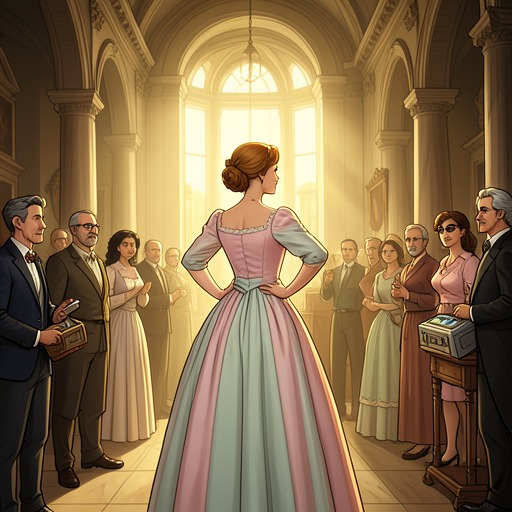
Clarissa remembers Bourton through a threshold moment: at eighteen, she burst through the French windows into the open air. The memory carries the sensations and anticipation of a morning, but it is also social: Peter Walsh’s teasing remark about finding her among the vegetables survives as one of the sayings by which she remembers him. The scene establishes the pattern of Bourton in the novel: particular gestures and words remain vivid even as much else disappears.
Bourton also stands for the limits of Clarissa’s early experience. Before Sally Seton arrived, Clarissa had little knowledge of sex or social problems; she had seen an old man die in a field and cows after calving, but discussion of difficult subjects was unwelcome to Aunt Helena. The protected life of the house was therefore not simply tranquil. Sally’s presence and conversation made Clarissa recognize how sheltered that life had been.
Sally Seton and the life of the house
Sally came to Bourton after a quarrel at home, having pawned a brooch to make the journey and arrived without money. Her sudden appearance upset Aunt Helena, who never forgave her, but it opened a different kind of life for Clarissa. The two sat talking late into the night in Clarissa’s bedroom at the top of the house, discussing how to reform the world. They even drafted, though never sent, a letter proposing a society to abolish private property.
The ideas were Sally’s, but Clarissa became caught up in them: she read Plato in bed before breakfast, as well as William Morris and Shelley. Bourton’s rooms thus serve as spaces for argument and imaginative possibility, not only domestic shelter. The setting’s social boundaries matter too: Aunt Helena’s refusal to tolerate open discussion, including her insistence that Sally’s copy of William Morris be wrapped in brown paper, contrasts with the expansive plans the young women made together.
Clarissa’s attachment to Sally is registered in the attention she gives her. She remembers Sally’s beauty and the quality of apparent abandon she herself envied, and recalls that Sally’s visit and ideas altered her sense of the life she had known. In the present, Bourton remains closely bound to Sally in Clarissa’s memory, while the story of Sally’s arrival makes clear that the house could be both a place of welcome and a site of domestic disapproval.
Peter Walsh and the landscape of recollection
Bourton is also central to Peter’s memories of Clarissa. Looking back across a friendship of almost thirty years, he understands that their actual meetings were often brief, interrupted, and painful, yet their effect on him was immeasurable. In his recollection, Clarissa returns in unlikely places and through small prompts; memories of her appear on board ship and in the Himalayas, while blue hydrangeas bring Sally Seton to mind. The remembered place persists less as a continuous residence than as a store of scenes that can reappear elsewhere.
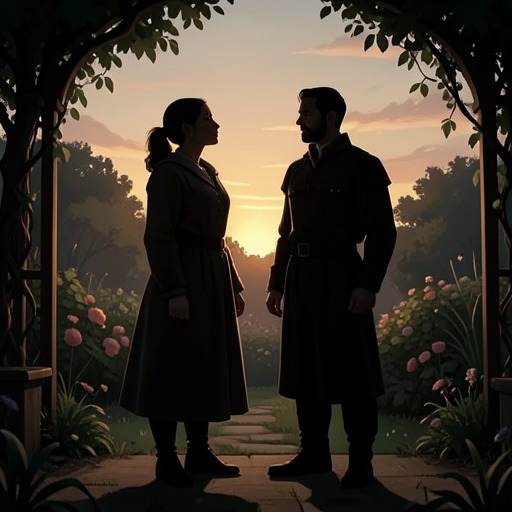
Peter’s Bourton scenes are active and shared. He and Clarissa walked across the country, arguing about poetry, people, and politics; Clarissa, whom Peter remembers as a Radical, would stop at a view or a tree and call him to look. She walked ahead carrying a flower for her aunt, and they returned to Bourton in the dusk. After dinner, old Breitkopf played the piano and sang without a voice; Peter and Clarissa tried not to laugh, then repeatedly broke into laughter. These details make the remembered relationship vivid without turning it into an uninterrupted idyll: Peter’s broader account stresses how painful and fragmentary their meetings could be.
A later recollection brings Peter back to the night after the scene by the fountain, when Clarissa marched him up and down and he was to catch the midnight train. He remembers that she had picked a rose, and that the leaves of the cauliflowers had looked like rough bronze in the moonlight. Bourton’s associations therefore include separation as well as intimacy: the remembered walk and the departure belong to the same emotional landscape.
Memory in the present
The novel lets Bourton enter the present through the different consciousnesses of Clarissa, Peter, and Sally. Clarissa’s passing remark about thinking of Bourton prompts Richard to mention Hugh’s presence at lunch, showing how the remembered place can surface in ordinary conversation and connect past acquaintances with the current day. Later, Peter’s recollections gather the old friendship into a series of particular scenes rather than a complete, settled history.
For Peter, that unevenness is essential: a meeting may be uncomfortable, while the person’s influence flowers in absence and in places far from where the meeting occurred. Sally, recalling the young Peter, likewise connects him to a past shared with Clarissa: she remembers his pocket-knife, the intensity of his love for Clarissa, and the quarrel over Richard, whom she had called Wickham. She and Clarissa saw one another only a handful of times in the following decade. Bourton therefore carries relationships that do not simply resume when recalled; it reveals both their continuing force and the years of distance around them.
Significance
Bourton gives the novel a structure for showing how intimate life persists without remaining unchanged. Its windows, upper-floor bedroom, country paths, and evening rooms belong to different kinds of contact: Clarissa’s solitary movement outdoors, late conversations with Sally, and long walks and shared laughter with Peter. The scenes offer concrete grounds for the people’s later reflections, while their return in memory places youthful possibility beside adult separation.
The setting also complicates nostalgia. Bourton holds excitement, conversation, and friendship, but it contains social shelter, family disapproval, painful departures, and relations later interrupted by absence. Its importance lies not in presenting a past to which the characters can simply return, but in showing how fragments of that past continue to shape their understanding of one another. For Clarissa and Peter especially, Bourton is a remembered meeting place whose effects survive long after the people and circumstances that made it have changed.